english













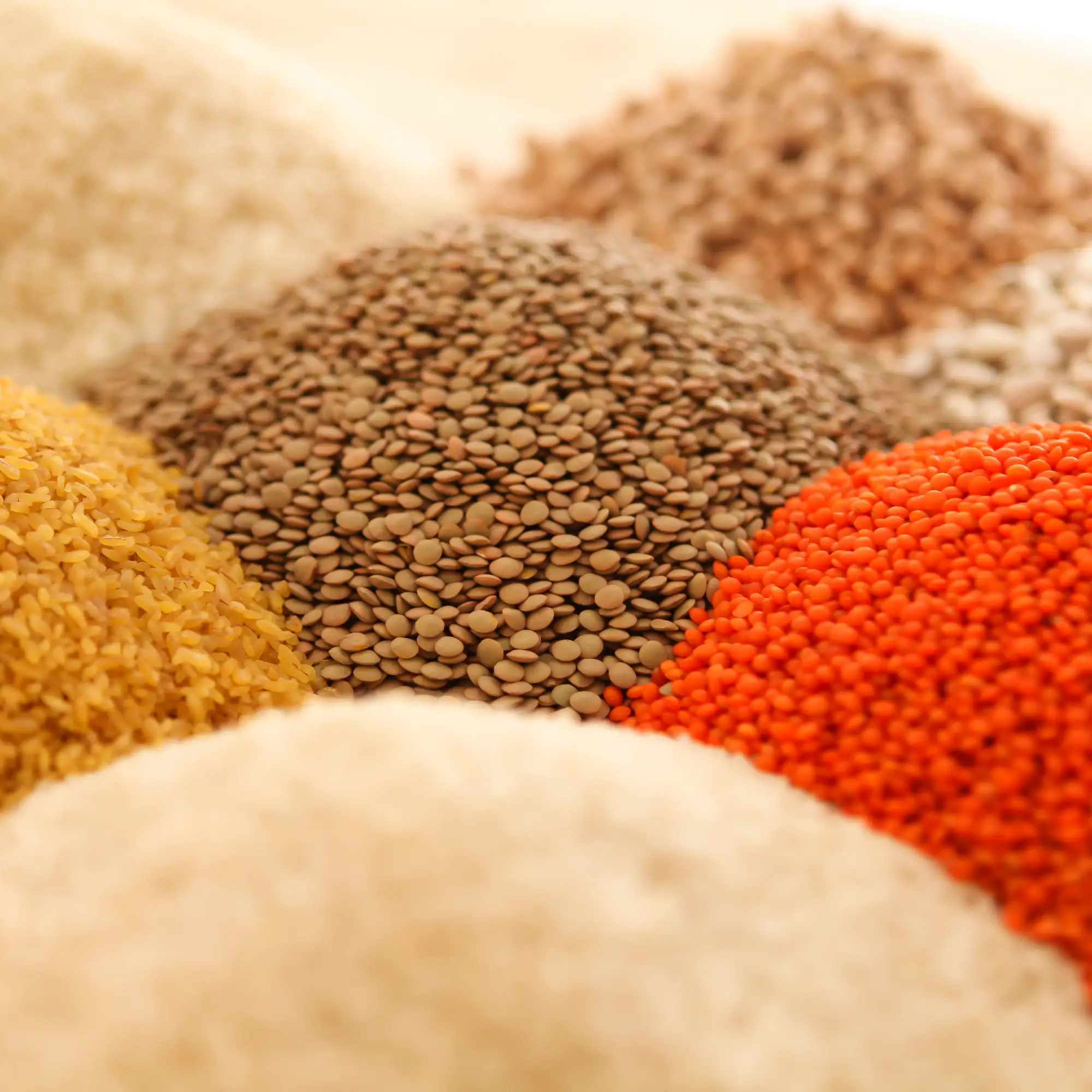
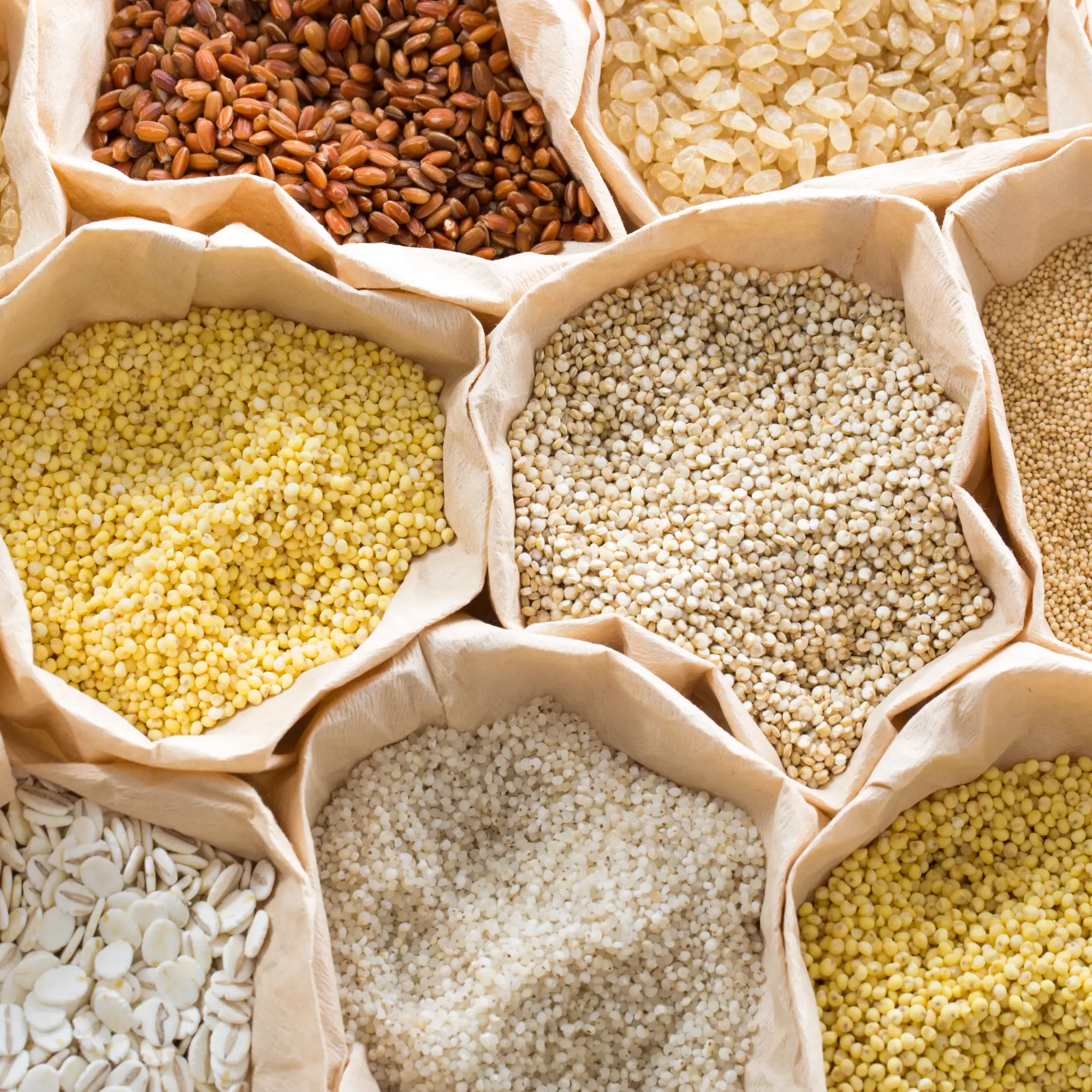





















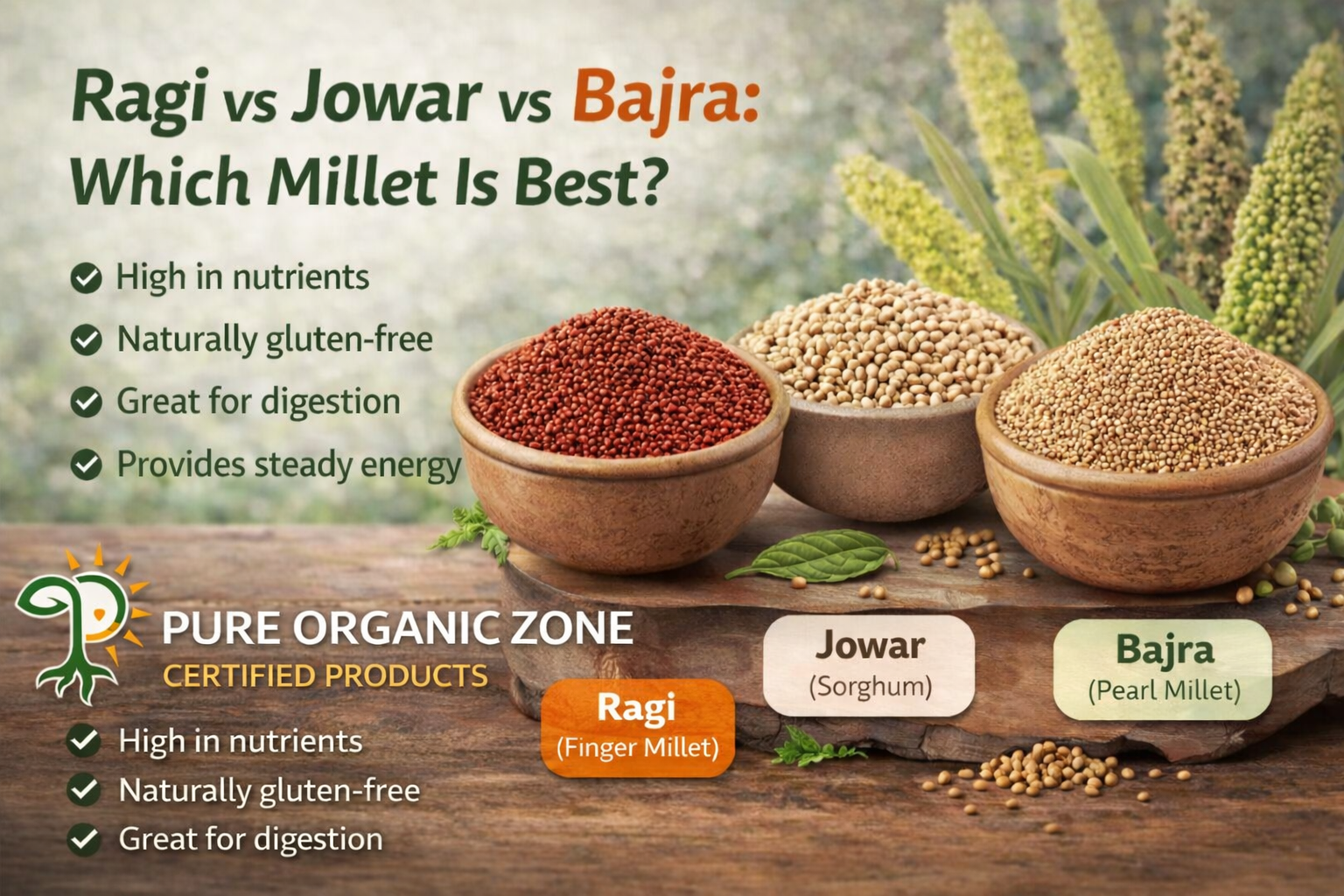
Millets have become increasingly popular as people look for healthier alternatives to refined grains. Among the most widely consumed varieties in India are Ragi, Jowar, and Bajra. These traditional grains have been part of Indian diets for centuries and are valued for their nutritional richness and versatility in cooking.
Understanding the differences between these three millets can help you choose the best option depending on your health goals and dietary preferences. Each millet offers its own unique nutritional profile, making them valuable additions to a balanced meal plan.
Why Millets Are Considered Healthy
Millets are naturally gluten-free grains packed with fiber, minerals, and plant-based nutrients. Because they are minimally processed, they retain more natural nutrition compared to refined cereals.
Key advantages of including millets in daily meals include:
• High dietary fiber for improved digestion
• Rich source of essential minerals
• Naturally gluten-free grain option
• Helps maintain steady energy levels
• Supports balanced nutrition
Adding different millets to your diet can help create more variety while improving the nutritional quality of everyday meals.
Ragi (Finger Millet)
Ragi is one of the most nutrient-dense millets commonly consumed in India. It is especially known for its high calcium content, which supports bone strength and overall health.
Nutritional Highlights of Ragi
• Excellent source of calcium
• Contains iron and amino acids
• High in fiber
• Supports bone health and digestion
Ragi is commonly used to prepare dishes such as ragi roti, dosa, malt, and porridge.
Jowar (Sorghum)
Jowar is another popular millet that has been consumed in many Indian regions for generations. It is valued for its fiber content and balanced nutritional profile.
Health Benefits of Jowar
• High fiber content that supports digestion
• Helps maintain stable energy levels
• Naturally gluten-free
• Contains antioxidants and plant compounds
Jowar flour is widely used to prepare rotis and other traditional foods.
Bajra (Pearl Millet)
Bajra is a nutrient-rich millet often consumed during colder seasons due to its energy-providing properties. It contains several minerals that support overall health.
Nutritional Benefits of Bajra
• Rich in protein and iron
• Good source of magnesium
• Supports heart health
• Provides long-lasting energy
Bajra rotis and porridges are traditional foods enjoyed in many parts of India.
Ragi vs Jowar vs Bajra: Understanding the Differences
While all three millets provide important nutrients, their strengths vary slightly.
Ragi stands out for its calcium content.
Jowar is appreciated for digestive support due to fiber.
Bajra provides high energy and important minerals.
Rather than choosing only one, many nutrition experts recommend including different millets in a weekly diet to gain the combined benefits of each grain.
How to Include Millets in Everyday Meals
Millets can be easily incorporated into daily cooking with simple recipes such as:
• Millet rotis or flatbreads
• Millet porridge for breakfast
• Millet dosa or idli batter
• Millet-based snacks and salads
These grains offer a wholesome alternative to refined wheat and rice.
Buy Organic Millets Online
If you want to include nutritious millets in your daily diet, you can explore high-quality options available at Pure Organic Zone.
👉 Browse millets here:
https://pureorganiczone.com/products?name=millets&data_from=search&page=1
🌐 Visit the official website:
https://www.pureorganiczone.com
📦 Delivery Available Across India
📞 WhatsApp Orders: 9704518572
Pure Organic Zone provides carefully sourced organic products to support healthier food choices.
The comparison of Ragi vs Jowar vs Bajra shows that each millet has its own nutritional strengths. Ragi supports bone health with its calcium content, Jowar contributes to digestive wellness, and Bajra offers energy and important minerals. Incorporating a variety of millets into your meals can help create a more balanced and nutritious diet.Choosing traditional grains like millets is a simple step toward healthier eating and long-term wellness.